Water can spread through a property in minutes, and just 1 inch of water in a typical home can cause up to $25,000 in damage. When that happens, you do not just need to dry things out, you need a clear plan to protect your structure, your belongings, and your health. In this guide, we explain how professional water damage restoration works, what you can do immediately, and how our local teams across the country help homeowners and businesses recover quickly and safely.
Key Takeaways
Question
Short Answer
What is water damage restoration?
It is the complete process of extracting water, drying, cleaning, sanitizing, and repairing a property after leaks, floods, or storms, typically handled by trained professionals in your area such as our team in Aberdeen.
How fast should I call for help after water damage?
Within the first 24 hours is ideal, because materials like drywall and flooring deteriorate quickly; our local crews in cities like Abilene are available around the clock for emergencies.
How much does water damage restoration usually cost?
Typical restoration projects range from minor cleanups to major rebuilds, and industry data shows the average water damage claim is about $15,400, which is why early mitigation is so important whether you are in Akron or any other city.
Is water damage covered by insurance?
Many sudden and accidental water events are covered, though long-term leaks and flooding may require specific policies; our team in Albuquerque and other locations can help you document losses for your insurer.
Can I handle water damage myself?
You can start basic mitigation such as shutting off water and mopping, but significant damage, contamination, or mold risk should be handled by professionals like our crews in Albany or Alexandria.
Do you cover suburbs and smaller communities?
Yes, our network serves large cities and surrounding areas, including communities like Allen, Allentown, and dozens of additional locations nationwide.
1. What Water Damage Restoration Really Means
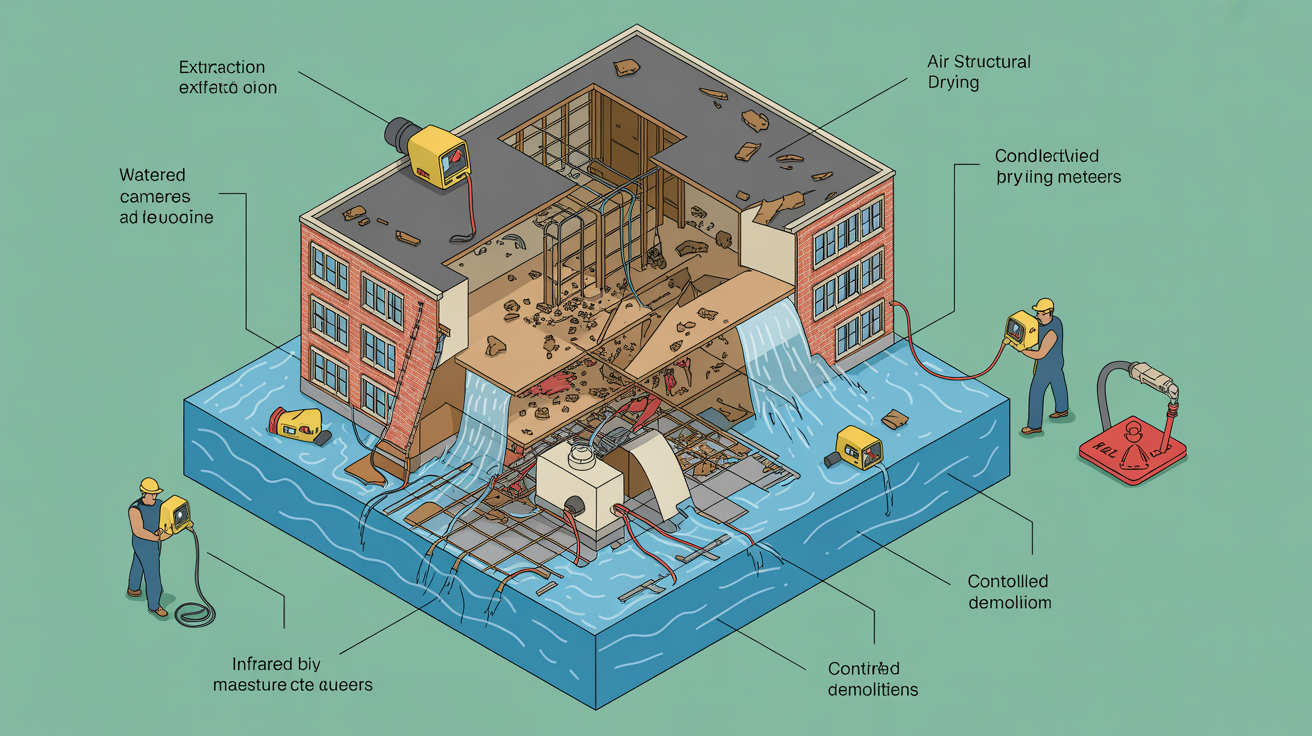
Water damage restoration is more than just drying carpets. It is a structured process that starts with emergency response and ends only when your property is returned to a safe, dry, and functional condition. Our teams handle everything from the first inspection through final repairs and cleaning.
In practical terms, a complete restoration project often includes water extraction, controlled demolition of unsalvageable materials, structural drying, decontamination, mold prevention, and repair or replacement of damaged finishes. Whether the source is a burst pipe, roof leak, appliance failure, or storm flood, we tailor the steps to the category of water and the extent of damage.
- Category 1 clean water, such as supply lines
- Category 2 gray water, like appliance overflows
- Category 3 black water, such as sewage or floodwater
2. Common Causes of Water Damage in Homes and Businesses
Understanding why water damage happens helps you respond faster and reduce future risk. In our daily work across multiple cities, we see the same patterns again and again, from aging plumbing to sudden weather events. Many of these issues start small and then escalate into large losses when they are not addressed quickly.
Some causes are obvious, such as a burst pipe in winter, while others are hidden inside walls or under floors. Leaking roofs, slow supply line drips, clogged gutters, and malfunctioning water heaters can all release water into building materials, where it quietly weakens structures and encourages mold growth.
- Frozen and burst pipes during cold snaps
- Overflowing tubs, toilets, and washing machines
- Faulty dishwashers, ice makers, and water heaters
- Roof leaks and wind-driven rain
- Storm surges and river flooding
- Foundation cracks and groundwater seepage
3. Immediate Steps To Take When You Discover Water Damage
The first minutes after you discover water damage are critical. While we dispatch an emergency crew, there are simple actions you can take that help protect your safety and limit further damage. Mitigation starts before the specialists arrive.
Safety always matters most. If you suspect electrical hazards, structural instability, or contamination from sewage, keep people and pets away from the affected area until professionals have evaluated it. In many cases, you can safely stop the source of water and move items out of harm’s way.
Essential Homeowner Checklist
- Shut off the main water supply if the leak is from your plumbing.
- Turn off power to affected rooms if it is safe to access the breaker panel.
- Move electronics, furniture, and valuables to a dry area.
- Document visible damage with photos and videos for your insurance claim.
- Call a qualified water damage restoration provider for professional assessment and extraction.
4. The Professional Water Damage Restoration Process Step by Step
Once our team arrives, we follow a clear, repeatable process that is based on industry standards and practical field experience. This system helps ensure nothing is missed and that your property is dried and repaired as efficiently as possible. It also provides the documentation your insurer typically expects.
Every job is unique, but the core stages remain consistent. We inspect, extract, dry, clean, and restore. Along the way, we communicate with you about findings, timelines, and any changes required if hidden damage is uncovered.
Stage
What We Do
1. Inspection & Assessment
Identify the water source, categorize contamination, and map out affected materials.
2. Water Extraction
Use pumps and wet vacuums to remove standing water from floors, carpets, and cavities.
3. Controlled Demolition
Remove unsalvageable drywall, insulation, flooring, and cabinets as needed.
4. Structural Drying
Deploy air movers and dehumidifiers, then monitor moisture until materials reach safe levels.
5. Cleaning & Sanitizing
Apply antimicrobial treatments, clean surfaces, and address odors.
6. Repairs & Reconstruction
Rebuild walls, floors, and finishes and return spaces to pre-loss condition.
Did You Know?
Water damage and freezing accounted for 22.6% of home insurance claims in 2023, making them one of the most common reasons homeowners need professional restoration services.
5. Equipment and Techniques Used in Professional Drying
Effective drying requires more than opening windows and hoping for the best. Our technicians use calibrated equipment and proven techniques to pull moisture out of the air and from deep inside materials. This is how we prevent hidden pockets of dampness that often lead to mold, odors, and structural problems later.
On a typical project, you will see commercial air movers, dehumidifiers, and sometimes specialized tools like injectidry systems that target wall cavities. We also rely heavily on moisture meters and infrared imaging to confirm that what looks dry on the surface is actually dry throughout.
- Air movers to speed up evaporation at surfaces.
- Dehumidifiers to pull moisture from the air and maintain proper humidity.
- Moisture meters to measure the dryness of wood, drywall, and concrete.
- Infrared cameras to spot hidden moisture behind walls and under floors.
6. Health Risks, Mold Concerns, and Contaminated Water
Not all water is the same. Clean water from a supply line is very different from sewage or outdoor floodwater. As restoration professionals, we start every project by evaluating contamination levels so we can protect your health and apply the right cleaning and disinfection methods.
Mold can begin to grow within 24 to 48 hours in damp conditions, so addressing moisture quickly is important. We focus on thoroughly drying porous materials, cutting out those that cannot be saved, and applying targeted antimicrobial treatments where appropriate.
Tip: If you notice a musty smell, staining, or visible mold after a water incident, avoid disturbing it and contact a professional. Improper cleaning can spread spores through your home.
- Category 3 events (like sewage backups) require protective equipment and specialized disposal.
- Children, older adults, and people with respiratory conditions are particularly vulnerable.
- We use containment barriers and air filtration on higher risk projects to keep unaffected areas safe.
7. Costs, Insurance Claims, and What To Expect Financially
Water damage restoration costs vary widely, from small cleanups to full structural rebuilds. The average water damage claim is about $15,400, so having a clear understanding of potential expenses and coverage is helpful when a loss occurs. Our goal is to contain costs wherever possible by stabilizing the situation quickly.
We regularly work with property owners and insurers to scope damage, prepare detailed estimates, and provide the documentation needed for claims. While every policy is different, many sudden and accidental water events are at least partially covered, especially when you act promptly and use qualified professionals.
Type of Incident
Typical Cost Range*
Notes
Small leak, limited to one room
$1,000 – $3,000
Extraction, drying, minor repairs.
Multi-room pipe burst
$3,000 – $10,000+
More demolition and reconstruction required.
Sewage backup or floodwater
$5,000 – $20,000+
Higher cost due to contamination and material replacement.
*Actual costs depend on size, materials, contamination, local rates, and how quickly mitigation starts.
Did You Know?
The average cost of water damage restoration ranges from $1,000 to $3,000 per incident, which is often far less than the long-term repair costs when problems are left untreated.
8. Residential vs. Commercial Water Damage Restoration
Water damage affects both homes and commercial properties, but the restoration approach can differ. In a residence, we focus on protecting your family’s living spaces, personal belongings, and long-term indoor air quality. In commercial settings, continuity of operations and safety for employees and customers are usually the top priorities.
For businesses, we often work in phases or outside of normal hours so you can remain open whenever it is safe to do so. Retail stores, offices, restaurants, and multi-unit buildings each bring unique challenges, from inventory protection to complex mechanical systems that must be inspected and dried correctly.
- Residential: Bedrooms, living rooms, kitchens, basements, and personal items.
- Commercial: Offices, warehouses, restaurants, apartments, and specialty spaces.
- Shared needs: Rapid extraction, thorough drying, clear communication, and safety.
9. How Local Water Damage Restoration Services Help in Your City
Water damage is always local. Weather patterns, building styles, and common plumbing configurations differ from city to city, and so do the types of incidents we see most often. That is why we organize our services around local teams that know the conditions in your area.
From heavy rain in coastal regions to winter pipe bursts in colder climates, our crews work in neighborhoods like Aberdeen, Abilene, Akron, Albuquerque, Albany, Alexandria, Allen, Allentown, and many more. This local knowledge helps us respond quickly, understand typical construction details, and anticipate where water is likely to travel inside each style of home or business.
Wherever you are located, our goal is the same: arrive quickly, stabilize the situation, communicate clearly, and restore your property to a safe, dry condition as efficiently as possible.
10. Preventing Future Water Damage: Practical Tips and Maintenance
Once restoration is complete, prevention becomes the next priority. We always encourage property owners to treat a water incident as a learning opportunity and strengthen the building against future problems. Simple maintenance and monitoring can significantly reduce the chance of repeat damage.
These steps do not require major renovations. Most involve inspections, small upgrades, and routine habits that catch issues early. By taking a proactive approach, you protect both your property and your budget over the long term.
- Inspect supply lines to appliances annually and replace old or brittle hoses.
- Clean gutters and downspouts seasonally to keep water moving away from your foundation.
- Check caulking and flashing around windows, doors, and roof penetrations.
- Insulate pipes in unconditioned spaces to reduce the risk of freezing.
- Install water leak detectors or smart shutoff valves in high risk areas.
- Have your roof inspected regularly, especially after major storms.
Conclusion
Water damage restoration is a structured, technical process that protects your property, health, and investment after leaks, storms, or plumbing failures. With water losses accounting for a significant share of home insurance claims, having a trusted professional team on your side can make a major difference in the outcome.
Wherever you live, our role is to respond quickly, assess damage accurately, and guide you through extraction, drying, cleaning, and repairs with clear communication at every step. If you are facing water damage right now, do not wait for it to get worse. Reach out to a qualified local restoration team so you can stop the spread, protect your property, and get back to normal as soon as possible.